

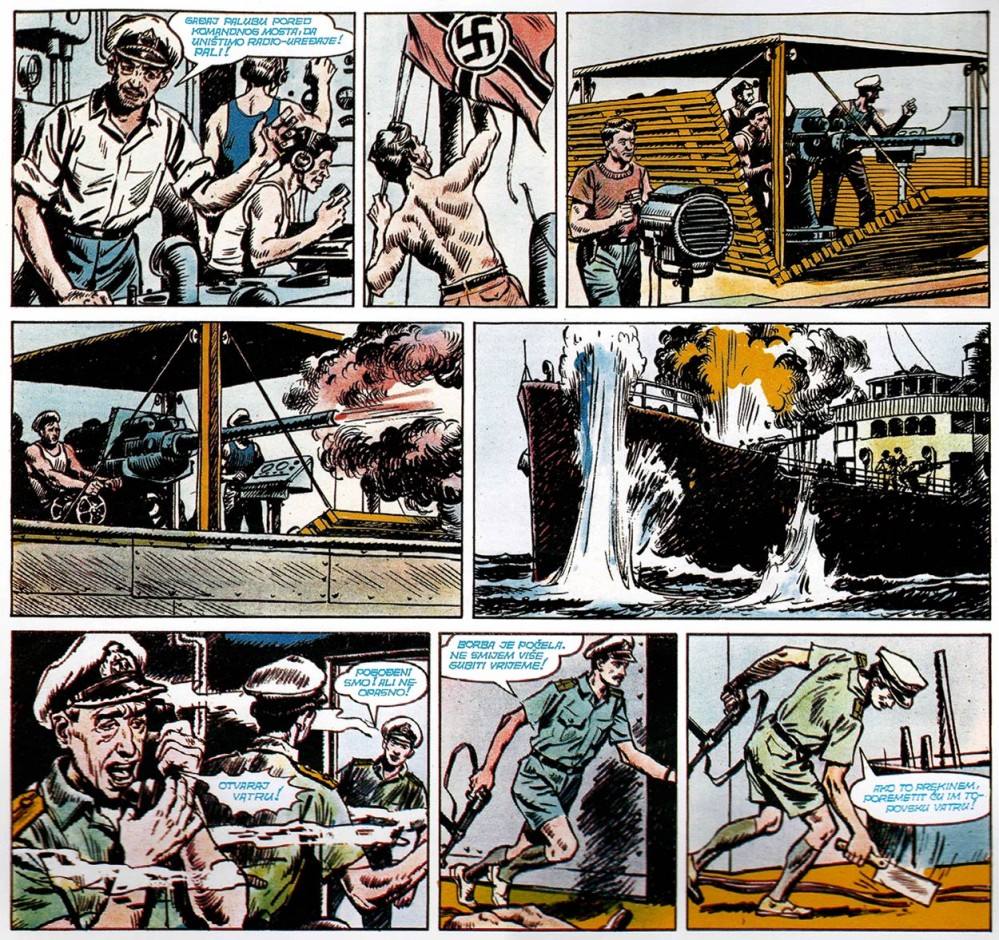
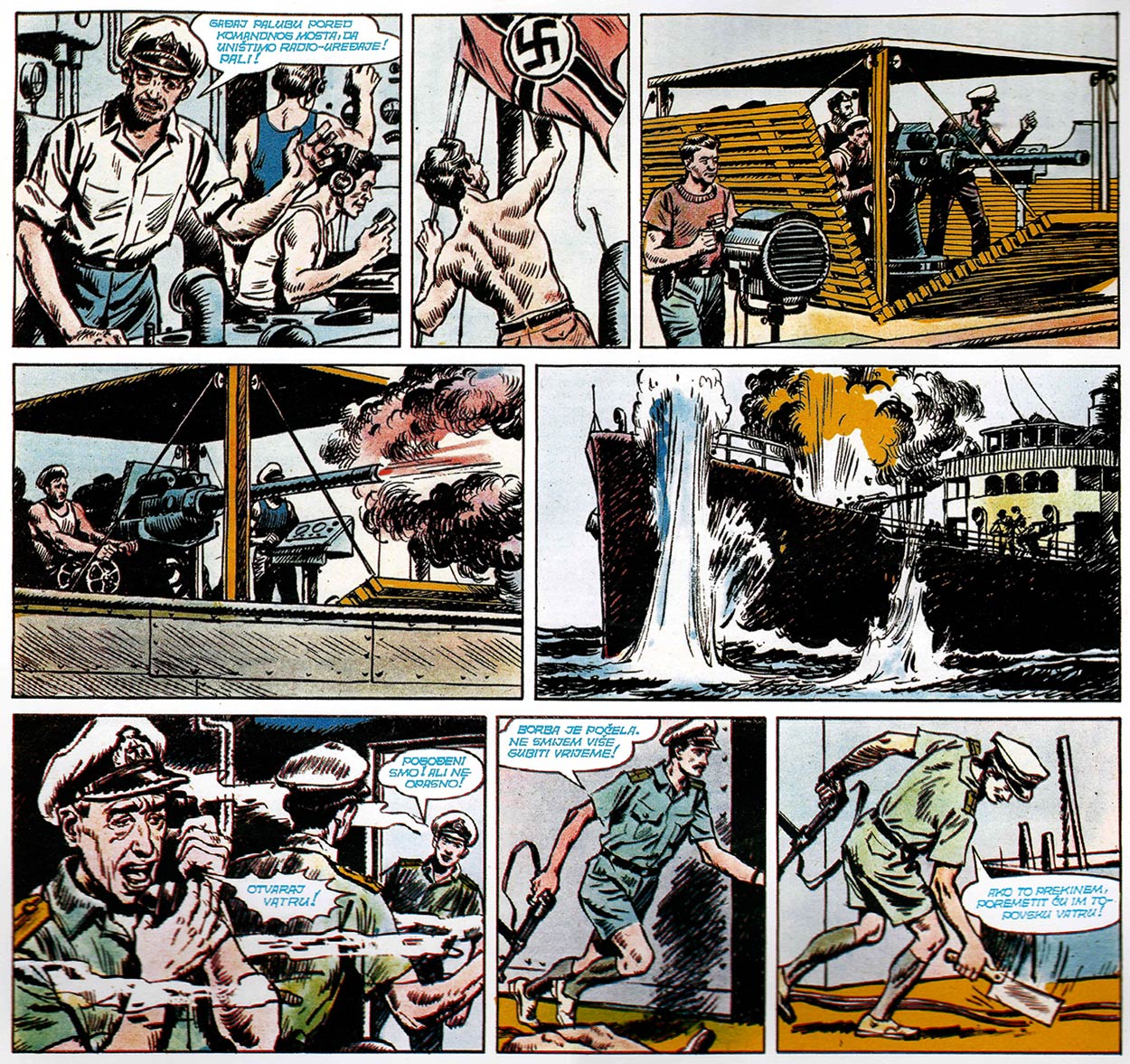
'Gusari na Atlantiku'.
Zdenko Svirčić was a Croatian comic artist, illustrator and sculptor, whose comics career was limited to six published serials between 1954 and 1966, most notably 'Gusari na Atlantiku' (1963) and 'U Ledenoj Pustinji' (1963) for Plavi Vjesnik magazine. He was a prominent illustrator for Zagreb newspapers and magazines like Vjesnik, Vjesnik u Srijedu, Arena and Globus, and also for books and movie posters.
Early life and career
Zdenko Svirčić was born in 1924 in the Dalmatian city of Split, at the time part of Yugoslavia. He was the eldest of five brothers. His parents were successful entrepreneurs, who ran the legendary Svirčić pastry shop in Split's Old Town district. Zdenko Svirčić showed an early talent for drawing and painting, and he was encouraged by his family and his drawing teacher to pursue his artistic ambitions. He was also tutored by the photographer Karl Stühler, who was affiliated with the Archeological Museum. At age sixteen, Svirčić took on sculpting, while also publishing his first story in the Zagreb newspaper Jutarnji list (1940).
After his grammar school education, Svirčić joined the Yugoslav Partisans in the National Liberation Army in 1944. His brigade operated in the Zadar area and participated in the final battles near the North-Italian city Monfalcone (known as Tržič in Croatian). After World War II, he enrolled in the Academy of Fine Arts in Zagreb, where he attended the sculpting courses of Frano Kršinić and Grge Antunc. At the academy, he also met his future wife, the sculptor Ružica Peter. After graduation in 1950, Svirčić settled in Zagreb, where he became one of the leading illustrators for magazines and books during the 1950s and 1960s.
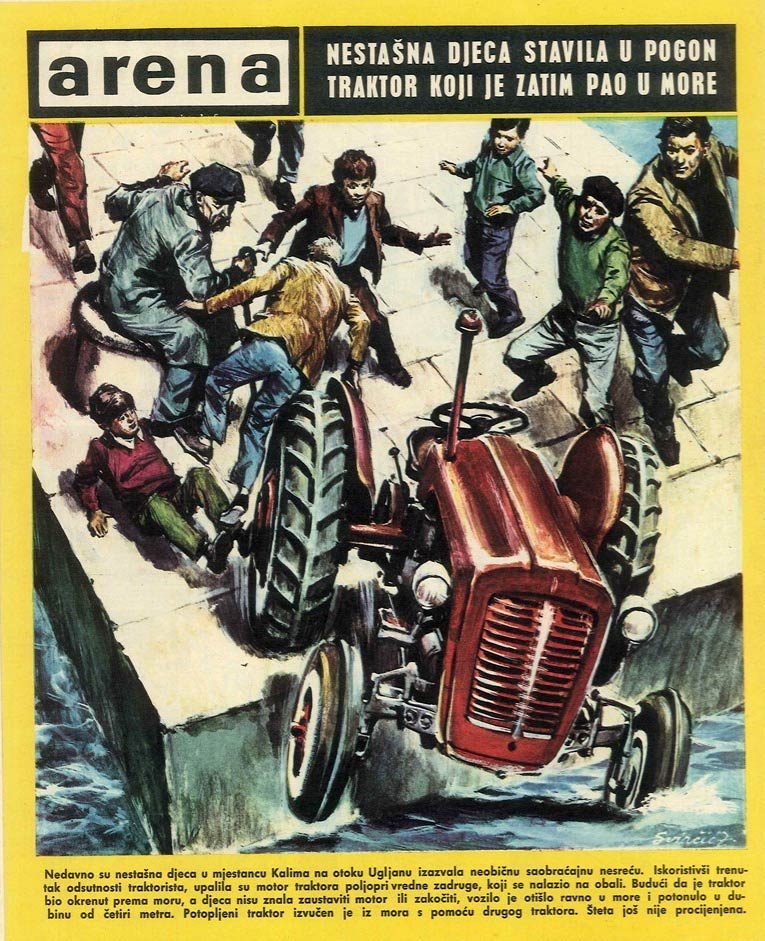
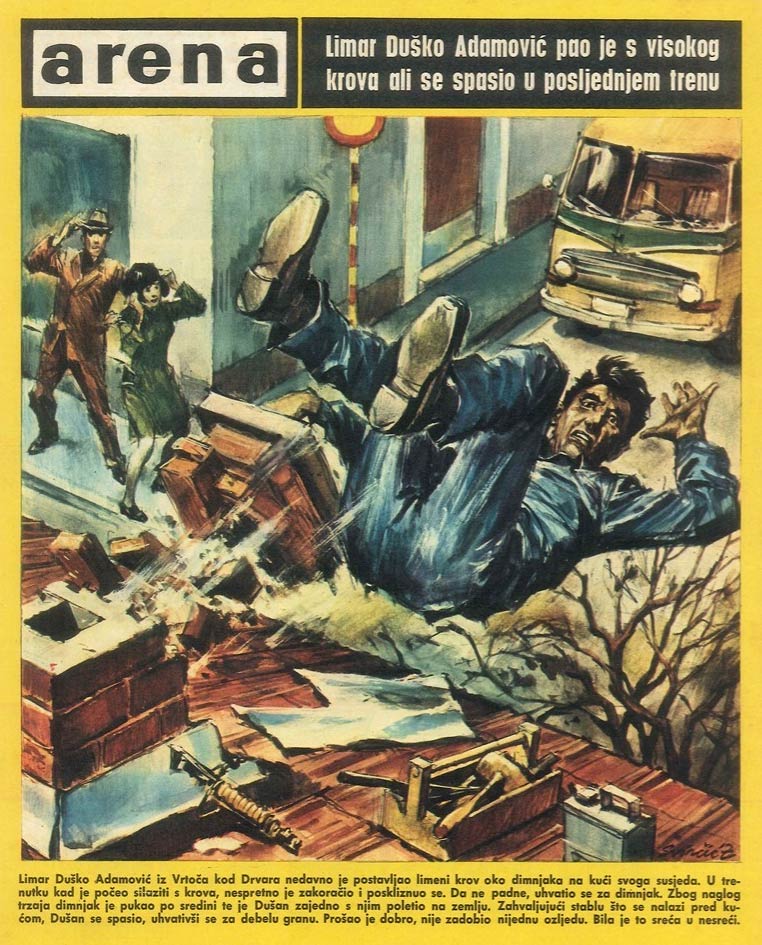
Cover illustrations for Arena.
Illustration work
While still a student, Zdenko Svirčić had begun making illustrations in the Zagreb press. Among his early clients were publications like Student List, Kerempuhu and, most notably, the national daily newspaper Vjesnik. In his home country, this was a period with a strong focus on visual and artistic quality, and new graphic techniques emerged. Papers and magazines tried to please their readership with high quality illustrations, while artistic fields like animation, music and theater also blossomed in the Zagreb region. Starting in 1952, Svirčić served as header designer and illustrator for Vjesnik u Srijedu, a weekly magazine edited by the legendary journalist Fadil Hadžić. He remained with the weekly, which is also referred to as VUS, until 1996. In the 1960s, Svirčić also began an association with the magazine Arena, for which he made a weekly back-page chronicle of bizarre events of everyday life. Further illustration work appeared in Plavi Vjesnik (late 1960s/early 1970s) and ZOV (1970s).
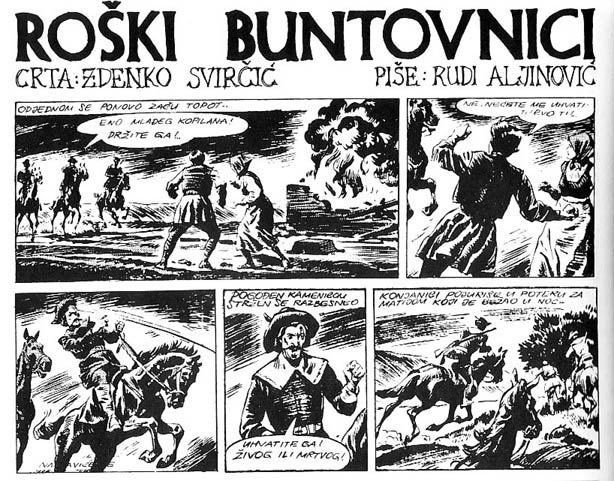
'Roški Buntovnici'.
Realistic comics
Besides being a newspaper and magazine illustrator/cartoonist, Svirčić worked on a variety of realistic comic stories in the period 1954-1966. His main influences were the American masters Alex Raymond ('Flash Gordon') and Hal Foster ('Prince Valiant'). One of his first projects was an adaptation of Gustave Flaubert's 1862 novel 'Salambo', but the project was never finished. Svirčić's first published comic was 'Zasjeda na Mediteranu' ("Ambush in the Mediterranean", 1954), written by Marcel Čukli and serialized in Miki strip magazine. Svirčić and Čukli collaborated once again for the serial 'Obruč' ("Hope"), which ran in Naša smotra in 1962-1963. In 1959, the editor of Plavi Vjesnik hired Svirčić and Žarko Beker to complete the serial 'Kroz minula stoljeća', filling in for Julio Radilović. Svirčić's most popular serials were 'Gusari na Atlantiku' ("The Pirates of the Atlantic", 1963) and 'U Ledenoj Pustinji' ("In the Ice Desert", 1963), which were both written by popular sci-fi writer Zvonimir Furtinger and serialized in Plavi Vjesnik. His final comic stories were 'Počelo je na Čukur-Česmi' ("It Started at the Čukur Fountain", 1966) and 'Roški Buntovnici' ("The Rebels of Rog", 1966), both scripted by Rudi Aljinović and published in Strip magazine. A final story by Svirčić and Aljinović called 'Pobuna Okovanih' ("Rebellion") remained unpublished. As it wasn't financially rewarding, Zdenko Svirčić's career in comics came to an end in 1967.
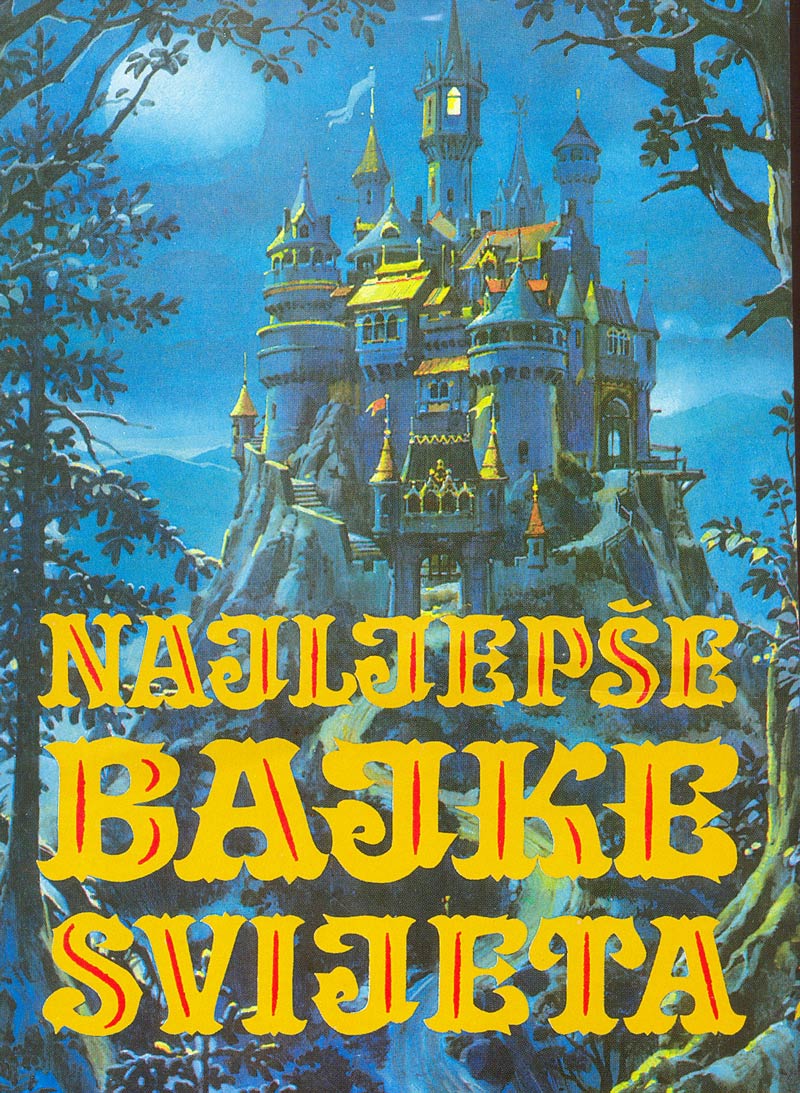
Cover illustration for 'Najljepše Bajke Svijeta'.
Final years and death
In later years, Zdenko Svirčić continued to work as an illustrator, while between 1973 and 1979 also serving as head of the creative department of IKOM, a solutions provider in the field of measurement and control equipment, devices, and fittings for gas and water in Croatia. During the 1960s, 1970s and 1980s, he was a versatile illustrator for storybooks, encyclopedias, historical works, traffic manuals and movie posters, as well as brochures and tickets for the tourist office. Most notably, he illustrated the cover for a collection of Charles Perrault fairy tales called 'Najljepše Bajke Svijeta' ("The Most Beautiful Fairytales in the World", 1971), which generations of Yugoslav children have grown up with. Starting in the early 1990s, his final major client was the weekly news magazine Globus, to which he contributed until a stroke forced him to stop drawing in 1996. The artist spent his final years making miniature sculptings with his right hand. For the last half-century of his life, Svirčić and his wife lived in the Črnomerc district of Zagreb. The artist passed away on 23 December 2016.
Legacy
Although Zdenko Svirčić's career as a comic artist was relatively short, it is far from forgotten in his home country. His six stories were collected in the 1984 monograph 'Hrvatski Poslijeratni Strip' ("The Croatian Postwar Comic") by Veljko Krulcic, along with work of Walter Neugebauer, Andrija Maurovic, Žarko Beker, Ivica Bednjanec, Jules Radilovic and Oto Reisinger. In 2013, his full comics output was also released in a book by Strip forum. The book was edited by Mladen Novaković and also featured an analysis of the artist's work by Marina Radišić and a reprint of the sole interview Svirčić gave about his comics work to Zdravko Zupan in the 1980s. His work has been featured on several national and international exhibitions of Yugoslav comics, for instance 'Splitcomics' in Split (2007) and '100 Years of Comics in the Balkans' in Brussels, Belgium (2014).
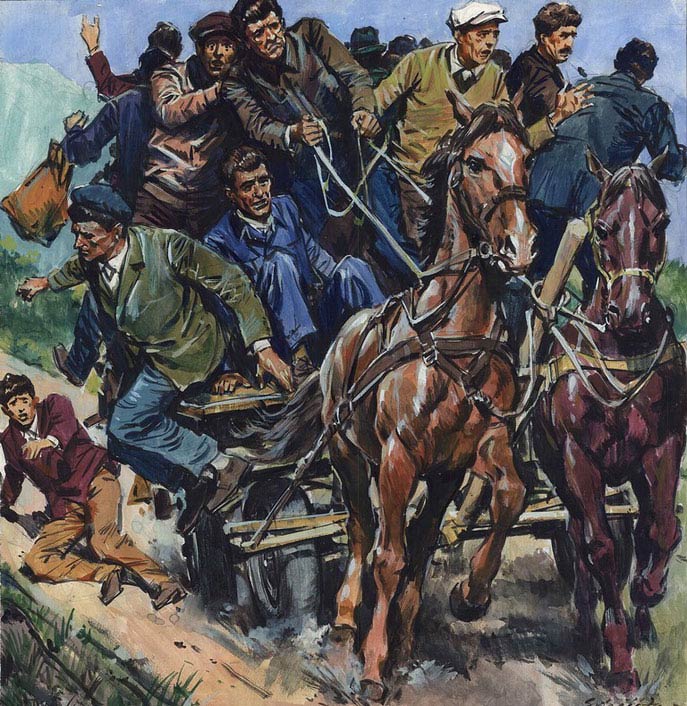
Illustration by Zdenko Svirčić.